Written by: Treasure Seeker Colleen
October 28, 2009
This was a well advertised show, but the person who really helped me with tickets, directions, and student interviews, is Rachel Tuttle, the extremely efficient Public Relations and Communications Coordinator for this event. It is always a great beginning when you have your tickets, your passes, your interviews and your photography site all ready to go. When you are welcomed and taken care of like this, you know that everything else will fall into place and the stage is set for the spectacular! Thank you Rachel!
The Fashion Program Guide's extraordinary photography was done at the Art Institute's Renfrew Campus, by Eydis Einarsdottir -
studio80s.com. Program design by
Grey-E - grey-e.com and Illustration by Matej Balaz -
lostinthejungledesign.com This guide "...is a celebration of the diversity...in fashion designers' collections at The Art Institute of Vancouver. Graphics are black and white and photography is in brilliant colour. The guide follows the order of the show. First, is the continent of Africa and on its map is the following: "Don't view trends as a list of things to copy, but draw your own fresh conclusions." The graphic is a two page spread of African animals, masks, people and clothing.
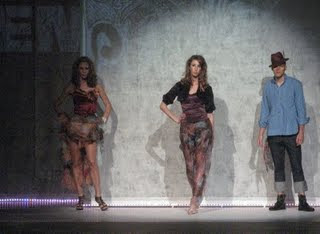
Each designer presents three outfits and they appear in front of a large, white screen, together, and then individually on the runway. I will describe as many details as I can, but the guide and the photos show much more. The models were beautifully made-up and coordinated, often with gloves, and hats and all with terrific jewelry and shoes. I was particularly impressed with each designer who strode confidently out to be acknowledged for her or his meticulously designed collection.
The first designer,
Nicole Lordes created a bronze laced up strapless top, with a long satin skirt and a fur lined cape. Another dress featured peacock feathers that were attached to the back of a bronze fitted dress, with a lace-up and hook and eye closure front. She looked like she was surrounded by a sun of brilliant coloured feathers. Where would you see a dress like this? On the red carpet, at a gala ball, or anywhere you want to make a statement.
Lacey Yorston's program guide shows a model in a cream coloured lace brocade, short sleeved, scoop necked dress, with fitted waist and slightly belled skirt over two layers of navy and cream, delicate, light ruffles. Puffed sleeves, short skirts and patterned stockings were standouts.
Gabrielle De Barry displayed pink - pink feathered headband, pink shoes and pink ruffled, sleeveless, scoop necked top over high waisted, form fitting trousers, slightly belled from knee to hem. Loved the green, pink and bright yellow colours in her collection.
Kimberley Der, a wonderfully enthusiastic interviewee, said that among her fashion influences are Balenciaga and Marc Jacobs. Originally from the University of Alberta, she was enrolled in the Fine Arts Program where she studied Print Making and Industrial Design. She then took a year off to work at Holt Renfrew. She also holds an Interior Design Diploma from NATE in Edmonton. Travel is also one of her inspirations and she backpacked for three months throughout Asia. She is of Chinese descent; her mom is from Hong Kong and her father, an abstract artist was born in Edmonton. She is influenced by architecture, especially by Frank Lloyd Wright and Frank Ghery. The demolishing of urban areas draws her attention to the colours and materials used in construction - rebar, concrete and mesh. She plans to start a business designing handbags but after seeing her collection of purple harem pants, short one strap dresses, silver halter topped, flared skirted, silver lined dresses and lots of ruffles, I predict that we will see more of her on the runway or how about at Holt Renfrew, Vancouver!
 (All photos courtesy of Siggy Dawson)
 fabulous black pearl dotted dress with one black and white feathered strap, was classic yet unique. Another outfit featured a feathered skirt and a black feathered head piece. Everything was form fitting and graceful.
Stephanie Jones sported muted colour combinations, subtle yet eye-catching. Hooded tops and long t-shirts with gorgeous pictures, headbands and sleeveless short dresses were casual yet sleek.
Trisha Pasnak showed three long dresses in orange, fuchsia and bright green. The fuchsia was a sleeveless, satiny gown of nipped in waist and layers with a tulle layer at the hem. It made the model look so tall and slim and elegant! The green and fuchsia dress was like a sari, also very slimming and delicate. Wear these on the red carpet too!
Travis Wozniczka's models were bare foot, which to me, indicated the high comfort level of her clothing. She featured a red silk lined cape and form fitting purples and pinks with materials cut in layers of deepening colours from waist to hem.
 Krista Brown's
 brown, backless, feathered top and matching pleated skirt were in keeping with the Africa theme and very different. A zippered black skirt with bra top and a bright orange cape of feathers showed her exquisite design and tailoring skills.
The music for the show was provided by
Ali Roshanravan and
Dax G and they chose fantastic selections that not only were in keeping with the Global theme but also were specific to each section. For example, the music for Africa was drumming and bird sounds and vocals.
Section 2
Section 2 of the show was Asia and on its map was the following message: "When cultures receive outside influences, they ignore some and adopt others, and then almost immediately start to transform them." The graphics include a dragon, fish, flowers, feathers, fans and temples, all in black and white and all captivating.
Daniela Agosta's program guide photo is a costume of cards, including a card hat, a scepter, and a dress with a high collar, belled sleeves, bustier with a card cover and a layered skirt with hearts and stripes and tulle edging under the hem. It is short and cute is the image of what the young, fashion conscious crowd wears in Japan. (Almost Harajuku)
Kamila Gougain Poblete should be the airline uniform designer for the world's airlines!. All of her outfits came with matching hats and great button detail down the front of the dress. Very sleek and beautifully designed; one even came with a designer life-jacket!
 Jaida Hay's
 back fitted sleeved t and pants and hat, fitted black cocktail dress with slim jacket with blue cuffs were simple but classic.
Kiki He designed lingerie and lounge wear in pinks, purples and mauves. Harem pants, short pants, silky short jackets and feathered mules set the scene for night.
 Courtney Jewell's
 satin looks featured a white short dress with a satin neckline and satin stripe down the back with a short lacy skirt. A second satin dress under a longer lacy jacket would be great at a wedding or summer afternoon party.
Erin Leatherby's elegant program guide photo shows off her silver topped dress with teal long skirt and teal off the shoulder sash. Another green and silver dress was like a sari. This collection contained vibrant colours and forms very much like what you would see at the Punjabi Market in Vancouver.
Shannon Weflen combines multi- colours and solids to stunning effect. Dropped waist purple and blue pants, ruffled multi-coloured skirts, and feathered hats were both fun and fantastic. Her profile picture shows her strapless raspberry top and ruffled raspberry, blue and gold layered short skirt with a long fan tail in the back. Full of movement and swing, it makes you want to dance.
 Yvonne Xie's
 program guide photo is a pink and blue plaid cap sleeved dress with a high ruffled collar and puffed hem. Makes a statement with its bold colours and lines and makes her look very, very tall.
Lulu Yin's white satin, strapless, long dress with elegant sequined empire waist design and matching over one shoulder red silky drape, is stunning and perfect for the Queen or the Red Carpet. A white cape was gorgeous, too. A plaid, short puff sleeved dress added an great informal look as well.

Section 3
Europe's map contained this message: "Greater collaboration between Art and Fashion means that the line between the two is blurring." The graphic designs include the Eiffel Tower, The Parthanon, the Greek Key design and much more.
Monica Berg's program guide picture shows off her green satin, short puffed sleeve dress with
patterned belt and front panel on the black skirt. A high necked tunic, button front black top and pants were collectables for sure. Look at the detail around the hem, here.
 Shea Hanrahan
 brought men's fashion to the stage with his red silk lined, hooded black knee length cape. Loved the side buttoned front. He also styled a hooded vest with 3 buttons, and used greys and blues in his collection. I liked the silver chain with a key detail hanging below the cape and the ax.
 Renuca Kumar's
 models wore pearls which effectively set off her designs. The bronze dress and silver shoes went well together. Her designs are sleek with intricate details like the narrow pleats at the hem of her bronze dress. A blue 3 button high necked jacket and silver top and close fitting, brown pants were elegant, too. A light coloured tweed coat had a colourful,jewel of a big button at the top.
Angela Kelly's high necked grey short cape and grey buttons was a classic, especially shown with grey slim pants and boots and a grey wristlet. A purple hat and purple vest were fabulous accessories with black pants.
Savannah Qiu designed a white chiffon like blouse with a huge ruffled collar and wide sleeves that looked great with a grey blue romper. She also showed a cute ruffled hat and a plaid dress with white ruffled petticoats and a velvet jacket and hat.
 Kirsten Pederson
 designed a long tuxedo coat with gold buttons and purple lining. The cutout pleats around the the bottom of the coat further displayed the lining and gave the coat lightness and movement. Her photo in the program guide shows a rust coloured, pleated high collar under a black longer fitted jacket with the cutout purple pleats and a knee length black skirt. Beautiful colours and fabulous styling!
 Reva Schmid
 was accompanied by the Pink Panther theme music. A military 12 buttoned great coat with a white satin lining was superb. Its divided panels arfully displayed the lining and once again provided a sense of lightness and movement. Three or four buttons were on the cuffs. The silver buttons also featured different designs. A black leather, long coat with green lining would be terrific for winter in Vancouver. A purple fitted black and purple top and mermaid bottomed skirt might be the surprise under either coat!
Jana Sophia featured a cream coloured, ruffled dress with a sparkly gold belt. Very Hollywood, this one must have taken hours to make all of those ruffles. Another Red Carpet or big stage dress, for sure.
 Kenda Ward's
 look is a combination of Romantic and Pirate. Costume designs or designs to feel fabulous in... Blouses were long sleeved with ruffled cuffs and vests laced up in front. Pants were cropped. A navy velvet short jacket with a long skirt made me want to stand at the prow of the ship, ready to set sail.
The third section, North America, contained this banner: "Globalization has changed us into a company that searches the world, not just to sell or to source, but to find intellectual capital, the world's best talents and greatest ideas." (Aren't many of them already here, in this show?)
The graphics for this include: The Statue of Liberty, the stars, First Nations designs, totems, salmon, towers, and, of course, much more.
Holly Kvill's program guide photo is of a royal blue short, strapless dress with 3 layers of gold
lined, blue panels. It's a very different take on ruffles and very elegant. Greens, golds and purples were regal colours, fitting for the outfits she designed.
 Kandis Peddle's
 white fitted, long, strapless dress had a gorgeous train of lace. Two other white dresses featured a white fitted lace top and a white fitted long lace capelet over the shoulders. Weddings, formals, Red Carpets, coming up.
 Emily Molenda's
 royal blue formal with a bow at the waist and a lace up back and tulle under skirt was flirty and flattering.
Sherry Perrault's look was a combination of pirate and school girl. Very young and fresh, too. Red and black plaids, red berets, fitted skirts with lace edging and high black boots completed the picture.
Kaitlyn Stewart also showed black and white and blue, white and beige plaids in a casual, sporty look.
Dorothy Suen's white satin two piece jacket and pants suit and little white hat are profiled in her program guide photo. Her white wedding dress was gorgeous with its short veil.
Ivanka Tanafranca's guide photo is of a black, fitted short dress with a belted black sleeveless jacket with white piping down the front. White, black and red were in her collection.
Renee Thiem's program guide picture is of a turquoise sleeveless dress, softly pleated to the knee. Classic Audrey Hepburn.
Veronica Trost designed a black short v-necked dress, halter style and a black jump suit with a tie in the back and softly draped pants. A short very fitted black dress with cap sleeves was just what you want but can never find. Silver bracelets and feathered earrings accessoried the looks.
Section 4
The fourth and final section was South America and on its map were these words: "Don't ask yourself what the world needs; ask yourself what make you come alive. and then go and do that. Because what the world needs is people who have come alive." With all the energy and action in this show, we certainly saw evidence of accomplished lives and wonderful futures. The graphics were of butterflies, snakes, masks, religious figures, trees, mountains, mesas and more.
Elizabeth Adams' models were masked. Her dresses featured lace up backs. A red and black dress was form fitting, long and had pleats along the bottom. A black leather dress was lined in red. Very dramatic!
Rachel Bernardo gave a great interview, in fact all three designers did, considering that they had just finished one show and were doing another almost immediately. They obviously love what they do and are very enthusiastic about the training and experience they have gained from The Art Institute of Vancouver. Rachel hails from the University of Winnipeg where she was originally in Communications. She is now fascinated with design and the creative aspect of it. She plans to continue in Journalism, eventually and feels she has a good perspective on a broad range of career options. She was interested in fashion from a young age and it helps that her mom is a dressmaker. Her parents are from the Philippines, a country known for beautiful design. Rachel's influences are Dior and couture and she like to wear Alexander Wang, Phillip Lim and young, new designers. She says that computers are an integral part of fashion, especially for one's own productions. She is working at Holt Renfrew, in the Jewelry Department, right now.
One of Rachel's outfits was a short white ruffled skirt, with a slim belt and a multi-coloured fitted, sleeveless top. Another was a one piece romper with sleeves in pink Very lively and summery.
Shannon Clay originally wanted to be a grade one teacher. Coming from a small town, she says it is unique to go into fashion. Most people go into more traditional fields. She's from the University of Lethbridge, Alberta. She's here, of course to study fashion and design, but also because she's only a one hour plane ride away from her family. She is a Figure Skating Coach who would like to make costumes. (Skaters will appreciate her fabulous designs.) She likes simple with an element of pizazz. Two of her influences are: her grandma, who made all of Shannon's skating costumes, and Lanvin. She looks to nature for the simplest and smallest flower that is so intricate, like a work of art. She see movement in the stamens of lilies and how they fold into each other. She is courageous because she entered this program with little sewing experience. Imagine! She is truly a global Canadian, having Chinese, Scottish and Norwegian in her background.

Loved the ruffled, pink(Cherry) dress - very short but lively and eye-catching. A yellow balloon skirt and a green, flounced, short dress with a large flower decoration demonstrated Shannon's love of colour and movement in her designs.
Marley Davis also had a very dramatic collection. A black jacket over a white, standing ruffled top was fantastic. The belled sleeves were edged in pink satin and the jacket featured a lace up front. Loved the slim pants and high black boots and long, black gloves.
Ashley Dilworth designed lingerie in purple, gold and turquoise. Negligees were long and silky with tiny panties underneath. Also noticed the white pants, slightly belled with a multicoloured top.
Danielle Keeping's lingerie was beige lace with laceup fitted tops and garter belts and lacy stockings and panties. Ribbed and fitted corset tops in turquoise were exquisite.
Lisa Leonard's collection featured lingerie: a purple bra top over purple panties, a black lace kimono sleeved jacket and a purple and black bra top with a purple train. Intricate beading and complex lace designs make this an admirable line.
Jinny No showed great variety of form, material and colour in her designs. A yellow strapless, empire waisted dress had two layers and a varying length hem which swirled as the model came down the runway. A velvet fur collared short coat was adorable. A White satin lined coat was also very attractive.
 Brooke Spagrud
 used red, black and white in her outfits. Black and white pants were under a long tuxedo coat. A black and white dress had red back ties. A long black and white fitted dress featured a black lace top, over white, layered with a lace apron, and black and white tiers of small pleats - 4 in all. The longer you looked at it, the more details became apparent. This is definitely a dance floor item.

A music video "When the Circus Came to Town", highlighted the performance aspect and the idea of travel around the world. The fantastic and the fabulous were all at The Global Gallery, a show well worth seeing from The Art Institute of Vancouver. It is commendable that " a portion of the general public sales revenue will go towards supporting Tradeworks Training Society which helps provide job related skills, counselling and work opportunities to at risk youth and adults living in the downtown eastside."


